

ContentStatus started as a 1–10 person team with an MVP that was starting to buckle under real usage: 100+ retailers depending on a platform that was slow, hard to scale, and getting more expensive to keep patched. Here’s what actually happened when a dedicated development team took it from MVP to an enterprise-grade platform, with verified numbers instead of adjectives.
Most of what gets written about outsourcing is theoretical: frameworks, checklists, decision trees for how to pick a partner. This is what one of those decisions actually turned into, four years in. If you haven’t worked through the earlier questions yet, our full guide to choosing a software development partner covers those properly. If you have, keep reading, because this is what the theory looks like once it turns into a real engagement with a real invoice attached.
Key facts
Figures verified against the published TechQuarter case study and ContentStatus’s Clutch review, both linked in references.
The business challenge
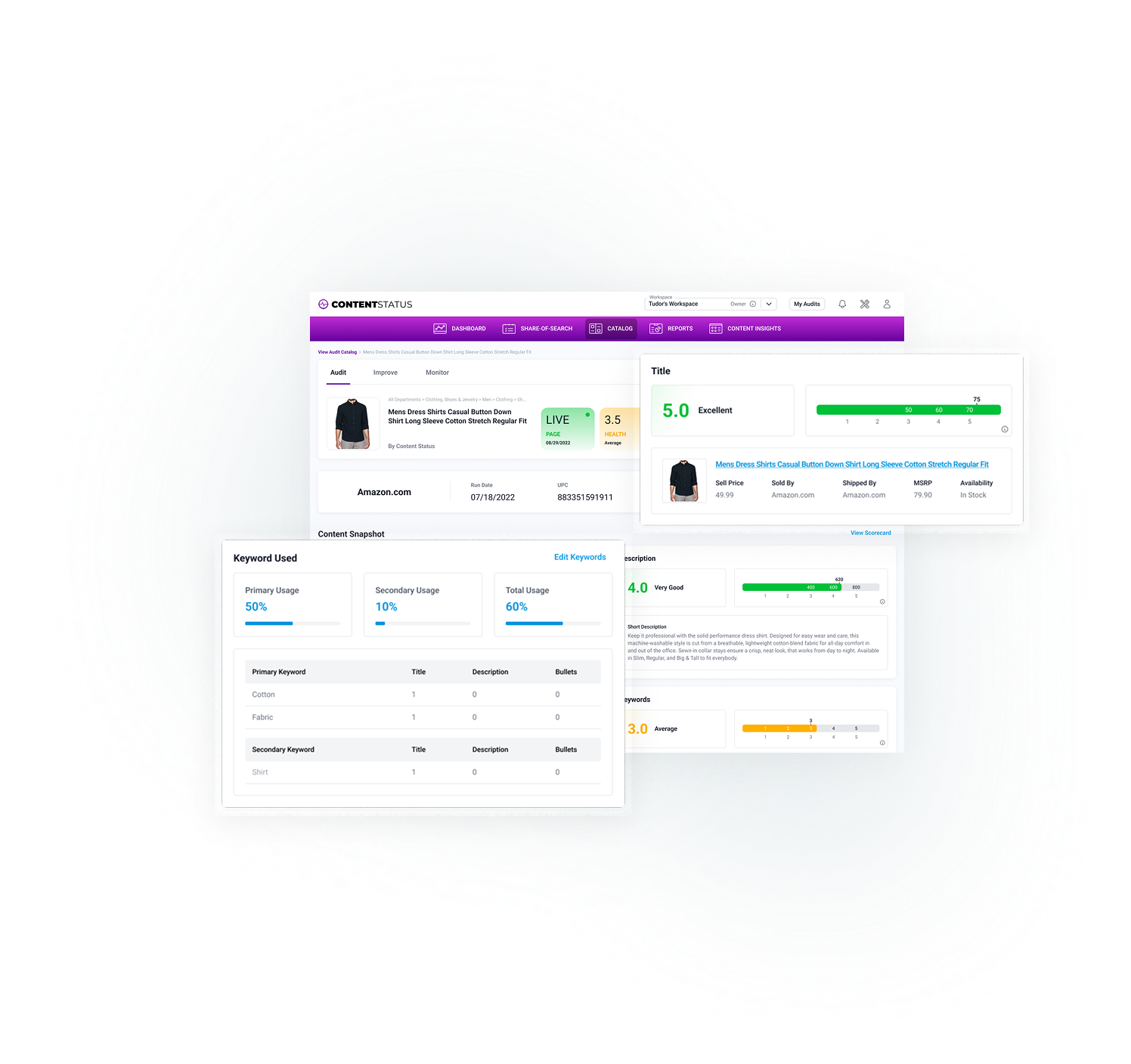
ContentStatus gives retailers, distributors, and marketplaces product-page analytics, content scoring, and competitive insight, serving 100+ retail clients at the time. The platform doing that job was the one built to get the company off the ground: workable, but slow, hard to scale, and getting more expensive to run as usage grew. That’s a familiar moment for anyone researching software development for startups: not before the MVP works, but right after, once the thing that got you to product-market fit starts being the thing that’s holding growth back.
The specifics of what needed fixing tell you more than the word “slow” does. Search wasn’t returning accurate results fast enough for a platform meant to flag content problems in real time. Content auditing was largely manual, so issues surfaced when someone went looking, not when they happened. Reporting ran on a batch cycle instead of showing retailers current data. And the data layer wasn’t built to move the volume ContentStatus was starting to push through it. None of these are exotic problems. They’re the standard shape of a codebase that was right for the first hundred customers and wrong for the next thousand.
| Before | After |
|---|---|
| Manual content checks, issues found after the fact | Customizable alerts and weekly automated auditing |
| Slow, imprecise search | Elastic Search integration |
| Batch reporting on a delay | Asynchronous, real-time reporting engine |
| No native billing infrastructure | Stripe-based self-serve payments |
| Data tooling not built for scale | Dynamic data mapping and import tools handling 30M+ pages |
The pattern worth noticing. This wasn’t a company with nothing built yet, and it wasn’t a freelancer-built MVP that just needed patching. It was a 1–10 person team whose product had outgrown the codebase underneath it, which is a more common reason to bring in outside engineering capacity than a blank-slate build, and a less forgiving one, since the platform has to keep running for existing customers while it’s rebuilt.
What we built
TechQuarter rebuilt the platform across four areas, without taking it offline for the retailers already using it.
Real-time search and alerting
Elastic Search integration for faster, more accurate results, plus customizable alerts and weekly auditing so content issues surface before a retailer has to go looking for them.
Result: part of what drives the 2.5M+ content issues identified on the platform to date.
Data infrastructure at scale
Dynamic data mapping and import tools built to handle the volume ContentStatus actually processes.
Result: built to support the 30M+ product pages the platform analyzes today.
A reporting engine built for real-time access
Asynchronous report generation cut processing time while keeping insights current, instead of forcing retailers to wait on a nightly batch job.
Result: retailers see current data instead of a night-old snapshot.
Monetization infrastructure
Stripe integration for secure, self-serve billing — the kind of thing an MVP usually bolts on later, and a scaling product needs to get right the first time.
Result: billing built into the platform itself, no manual invoicing layer to maintain.
Rebuilding a live platform without breaking it
The part of this project that doesn’t show up in a stat band is that ContentStatus couldn’t take the platform offline to fix it. There were 100+ retailers depending on it while the rebuild was happening. That constraint is what actually separates a startup-stage rebuild from a greenfield build, and it’s also where a lot of MVP-to-enterprise transitions go wrong: teams either rewrite everything at once and break production, or patch around the edges forever and never actually pay down the underlying technical debt.
The approach here was closer to the second option done properly than the first: rebuild module by module (search, data infrastructure, reporting, billing) so each piece could ship and prove itself before the next one started, instead of betting the whole platform on one big cutover. It’s a slower way to work in the short term. It’s also the difference between a rebuild that survives contact with real customers and one that doesn’t.
Why a dedicated team, not a freelancer or a bigger in-house hire
This is where the case study earns the name, because the mechanics matter more than the highlight reel.
- 6–10 TechQuarter engineers, sized to the rebuild rather than a fixed retainer, working as a dedicated development team.
- Continuity since November 2021. Same team, same context, compounding institutional knowledge instead of resetting every few months.
- Selected for pricing fit and technical range, per the client’s own account: both front-end and back-end capability under one software development outsourcing engagement, at a rate that fit ContentStatus’s budget rather than requiring a separate conversation about outsourcing cost for every new piece of scope.
- Time zone overlap that didn’t slow anything down, the practical question behind most nearshore vs offshore decisions.
- Weekly cadence, not monthly check-ins — the difference between catching a blocker in days and discovering it at the next scheduled call, which is most of what determines whether communication with an outsourced team holds up over a multi-year engagement.
Dedicated team vs. building in-house from scratch. Hiring in-house means recruiting, onboarding, and ramping engineers before any of the rebuild starts, on a startup’s runway. A dedicated team was already assembled, already had the range (frontend, backend, DevOps, QA) the rebuild needed, and started shipping in week one instead of month three.
Business impact
The rebuild didn’t just make the platform faster. It removed the ceiling on how many retailers ContentStatus could support, which is the actual test of whether a rebuild was worth doing: can the company keep growing on top of it, or does it need another rebuild in eighteen months. Four years past the original engagement, with the same core team still in place and the platform still standing up to new volume, that question has an answer.
There’s a version of this story where a startup spends its outsourcing budget on a rewrite that looks impressive in a demo and buckles again in a year. The reason that’s not what happened here is mostly unglamorous: the rebuild targeted the specific things that were actually breaking (search, auditing, reporting, billing, data volume), not a wholesale reimagining of a working product. Scope discipline doesn’t make for a dramatic case study, but it’s most of why this one is still standing.
What ContentStatus says
I was particularly impressed by the company’s strong cultural fit… They were open to collaborating with a startup… Their deep technical knowledge, combined with a collaborative and proactive approach, makes them a valuable asset.
Independently verified on Clutch, not written by TechQuarter.
If you’re earlier in this decision
This case study is the proof step. If you’re still working through the decision itself, these cover the parts that come before it:
- How to evaluate a software development company before signing
- Software development outsourcing checklist for startups
- What your portfolio CTO needs in a dev partner
- Hidden risk: technical debt after Series A
- Red flags when hiring a software development agency
FAQ
Can startups benefit from software development outsourcing?
How do software outsourcing models help scale development teams?
How can a dedicated team help a startup scale its product team?
What should a software development outsourcing case study show before I trust a vendor?
- TechQuarter. Content Auditing & Monitoring Product for eCommerce case study. techquarter.io/our-work-case-study-content-auditing-and-monitoring-product-for-ecommerce
- Clutch. TechQuarter LLC — verified client review, Content Status LLC (Viktor Jagar, CTO). clutch.co/profile/techquarter