


For a US startup, choosing where to build comes down to three options: nearshore (Latin America, full-day overlap), offshore (Asia, lowest cost, least overlap), and Eastern Europe (deep senior talent with a morning overlap). Cost once decided it; Deloitte’s 2024 survey shows talent and collaboration now weigh as much. This guide compares overlap, rates, talent, and communication, and treats the choice as a fit decision, not a ranking, matching each model to how your project actually runs.
For a US startup deciding where to build, the choice usually comes down to two options that sound similar and behave very differently: nearshore, which in practice means Latin America, and offshore, which usually means Asia. Eastern Europe is a strong third option in its own right, which we will place honestly in a moment. Whichever region you land on, the choice sits inside a broader decision about how you structure the engagement itself, not just where the team sits.
What has changed is why the question matters. For years the answer was simply “whichever is cheaper.” Deloitte’s 2024 Global Outsourcing Survey found the share of organizations naming cost reduction as their top outsourcing driver fell from 70% in 2020 to 34%, with access to talent overtaking it. Once cost stops being the only variable, where your team sits, and how easily you can work with it, starts to matter as much as what it charges.
Nearshore vs offshore: the actual difference
The labels describe distance and time-zone gap, not quality. Onshore means a team in your own country. Nearshore means a nearby country within a few hours of your time zone. Offshore means a distant one, often on the opposite side of the clock.
For a US company specifically, that maps cleanly: nearshore is Latin America, with one to four hours of difference and most of the working day shared. Offshore is South and Southeast Asia, eight to twelve hours away, where their day largely ends as yours begins.
Eastern Europe is a distinct third option, and worth treating as one rather than a midpoint between the other two. By distance it is offshore for a US client, roughly seven hours ahead of the East Coast, but that gap leaves a dependable few hours of overlap across your morning, paired with a particularly deep, senior engineering talent pool and long experience working with Western companies. For Western European firms it is genuine nearshore; for US ones it is best understood as offshore by distance with a real, working morning window.
| Nearshore (Latin America) | Eastern Europe | Offshore (Asia) | |
|---|---|---|---|
| Time-zone overlap | Most of the working day, 1–4 hour gap | A few focused hours each US morning, ~7 hour gap | Little to none, 8–12 hour gap |
| Typical senior rate | $50–$85/hr | $45–$85/hr | $25–$60/hr |
| Talent pool | Large and growing fast | Deep and senior-heavy | The largest in the world |
| Communication | Real-time, strong English, close cultural fit | Strong English, long experience with Western clients, partial real-time | Mostly asynchronous, needs discipline |
| Best fit | Collaborative, full-day product work | Demanding product and platform work needing senior depth and a daily sync | Well-defined, modular, cost-led work |
Why more companies are choosing nearshore
The shift Deloitte measured shows up most clearly in proximity. When the priority moves from saving money to moving fast with good people, a team you can actually talk to during your workday becomes worth paying for. Real-time collaboration shortens feedback loops, which is exactly what early product work depends on.
The market has put a price on that proximity. Across 2026 rate coverage, Latin American rates tend to sit a little above the lowest offshore regions, which industry observers read as buyers paying a small premium for overlap and easy communication rather than chasing the lowest possible hour. Nearshore is rarely the cheapest option. It is often the one with the lowest total cost once coordination is accounted for.
This is also why hybrid models are spreading: onshore leadership, nearshore or Eastern European collaboration, and offshore execution combined, with each region doing what it does best. A dedicated team structure tends to be where this hybrid approach works best, since it’s built for exactly this kind of ongoing, blended collaboration rather than a one-off handoff.
When offshore still wins
Nearshore is not the right answer for everyone, and pretending otherwise would be dishonest. Offshore development is the stronger choice when the work is well specified and modular, when cost is genuinely the dominant constraint, when the volume is high and the tasks are repeatable, or when you can run a disciplined asynchronous process and do not need daily real-time contact. There are also specific skills and enormous talent pools in Asia that are simply harder to source elsewhere. And for teams that can structure it, the time-zone gap can be turned into a follow-the-sun advantage, where work moves around the clock.
Collaboration-heavy work points the other way, toward overlap: agile product development where requirements shift weekly and a same-day answer keeps the build on course. Latin America offers the fullest overlap for that. Eastern Europe offers a deeper bench of senior engineers with a focused morning overlap that covers the live touchpoints most teams actually need, standups, planning, reviews, and unblocking, while the rest of the day runs async like any distributed team. For a startup whose hardest problem is engineering depth rather than round-the-clock availability, that trade often lands in its favor.
This is a fit decision, not a ranking. The best model is the one that matches how your project actually runs, and it’s worth confirming that fit the same way you’d weigh staff augmentation against a dedicated team or a scoped project: against what the work actually needs, not against a general preference for one region or model.
How time zones, culture, and communication play out
This is where the models genuinely diverge, and it is the part founders feel most after signing.
Time-zone overlap decides whether collaboration is real-time or asynchronous. With a nearshore team, a question asked at 10am is answered before lunch. With an offshore team on the opposite clock, the same question waits until tomorrow, so a week of small clarifications can quietly stretch a sprint. A partial overlap, the few morning hours an Eastern European team shares with the US, sits between the two: enough live time for the meetings that genuinely need it, with the rest handled asynchronously. Plenty of effective distributed teams run on exactly that, which is why a full shared day is a real convenience rather than a strict requirement.
Culture and language sit underneath the clock. Shared business norms and strong English reduce the misunderstandings that turn into rework, and rework is where outsourcing budgets quietly bleed. Latin America’s cultural alignment with US teams is a large part of its appeal; Eastern Europe’s long experience with Western clients does similar work. Offshore teams can absolutely deliver here, but the burden of clear communication falls more heavily on you, which is exactly the discipline our guide to managing an outsourced development team without losing the thread walks through in detail.
Choosing for a US startup
Match the model to how you work and where you are. If you are early and still discovering the product, with scope that shifts and a need for fast feedback, overlap is worth paying for: Latin America gives you the fullest shared day, and an Eastern European team gives you a senior bench you can reach every US morning. If your hardest constraint is engineering depth or a specialized skill, Eastern Europe is often the strongest fit of the three. If the work is well defined, modular, and cost is the binding constraint, offshore becomes a sound choice and the savings are real. This decision looks a little different depending on your stage too, our software development for startups page covers how.
Two related questions shape this one. What the work will actually cost, beyond the headline rate, is covered in our breakdown of software development outsourcing cost. And before any of this matters, it’s worth confirming the partner itself can execute, which is what our guide to evaluating a software development company is for.
Frequently asked questions
What is the difference between nearshore and offshore software development?
Why are more companies choosing nearshore outsourcing?
When should a company choose nearshore instead of offshore development?
How do time zones, culture, and communication affect nearshore vs. offshore teams?
If you’re weighing this decision as part of a bigger one, our full guide to choosing a software development partner covers the rest of it, and if you’re outsourcing for the first time, our outsourcing checklist for startups is worth reading alongside this one.
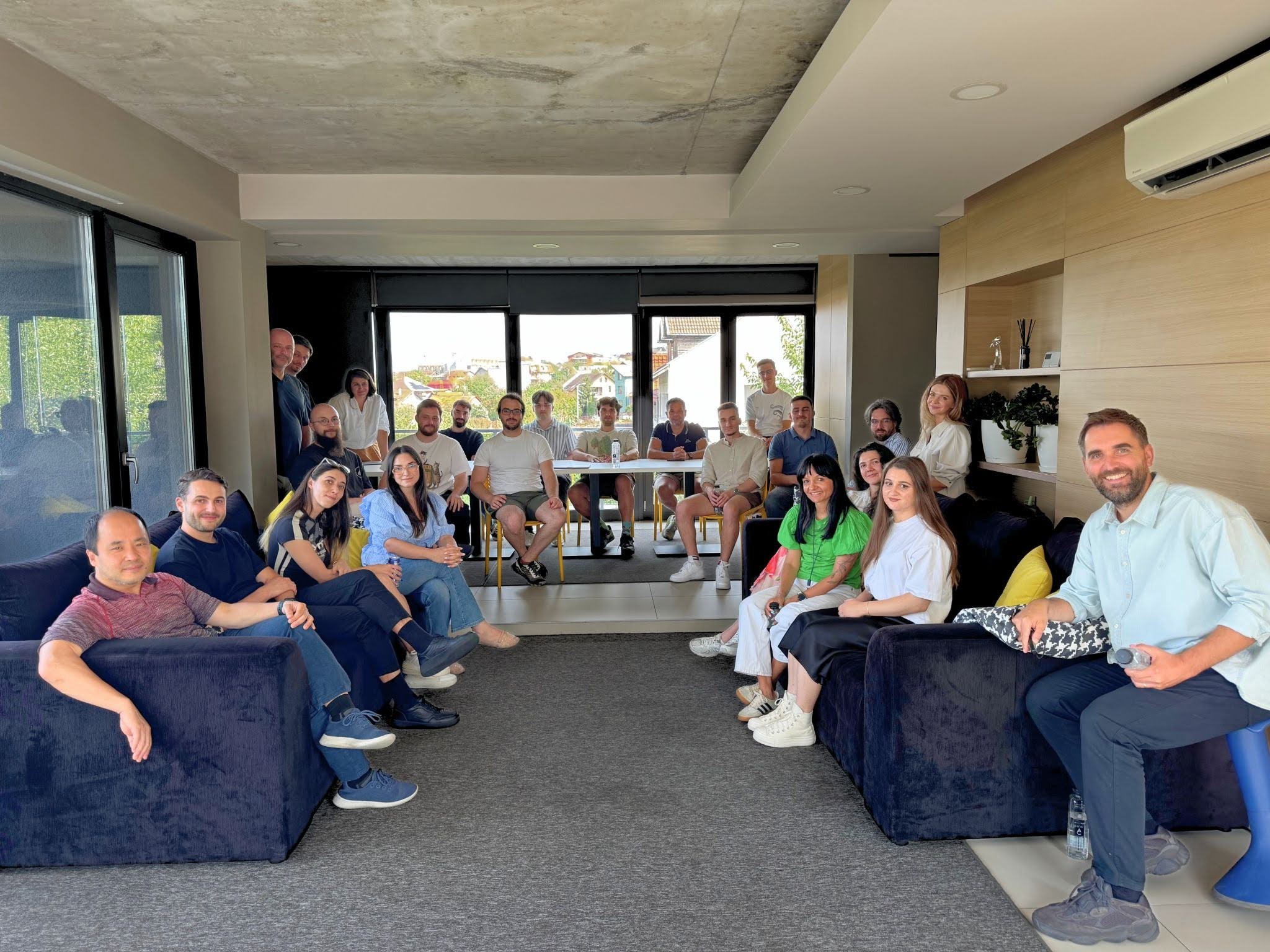
We work from Eastern Europe specifically for the overlap this article describes, here’s what that looked like for one client’s dedicated team engagement.
- Deloitte (2024). Global Outsourcing Survey (skilled talent and agility have joined cost reduction as key outsourcing drivers; the widely reported headline figure is that cost reduction as the primary driver fell from 70% of organizations in 2020 to 34%). deloitte.com
- Regional rate ranges are an indicative consensus synthesized from multiple 2026 software-outsourcing rate guides, which vary by source and methodology. Published benchmarks include those from Accelerance, among others. They are orientation, not a single authoritative figure.